Roasted Vegetable Bowls: 6 Gorgeous, Satisfying Recipes Worth Making on Repeat
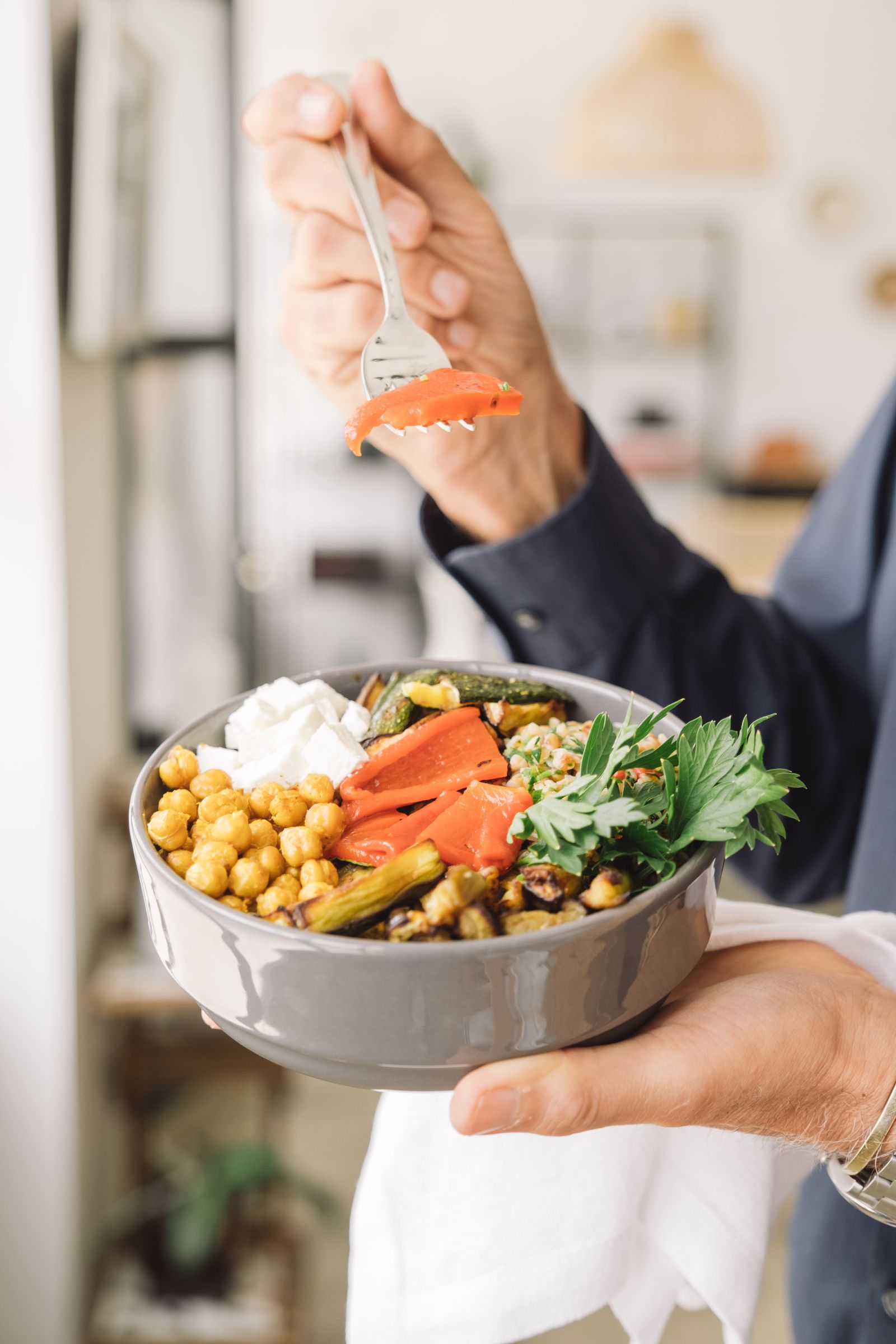
There’s a meal that asks very little of you and returns more than it has any right to. You cut some vegetables, you roast them at high heat until the edges turn golden and the centers go soft, you make a sauce, and suddenly dinner isn’t just food — it’s something you’d actually photograph before eating.
Roasted vegetable bowls are that meal. They’re the dinner that fits every mood: light enough for summer, satisfying enough for when you’re genuinely hungry, meal-preppable for the weeks when you need the week to cooperate.
Here are six versions worth making on repeat, each with a specific character, a sauce that earns its place, and instructions precise enough to work the first time.
Why Roasted Vegetable Bowls Are the Meal That Always Delivers
Most healthy meals require a choice between eating something that tastes good and eating something that’s actually good for you. Roasted vegetable bowls are the rare exception that refuses the premise entirely.
High-heat roasting — 200°C / 425°F or higher — transforms vegetables in a way that steaming, boiling, or even sautéing doesn’t. The Maillard reaction caramelizes the natural sugars in the vegetable, creating depth of flavor, textural contrast between crisp edges and tender centers, and that specific quality that makes people come back for seconds before they’ve finished the first bowl.
According to Dishing Out Health’s 2026 roasted veggie guide, the other advantage is practical: roasting breaks down certain fibers in vegetables like broccoli and cauliflower, making them easier to digest. The flavor improves; the gut load decreases. It is, in the best way, a case of something being exactly as good as it looks.
- Prep time for any of these bowls: 15–20 minutes of hands-on work, 25–30 minutes of oven time
- All six recipes are meal-prep compatible — components keep separately in the fridge for four days
- Each bowl is easily adapted for protein additions: roasted chickpeas, tempeh, a poached egg, leftover grilled chicken
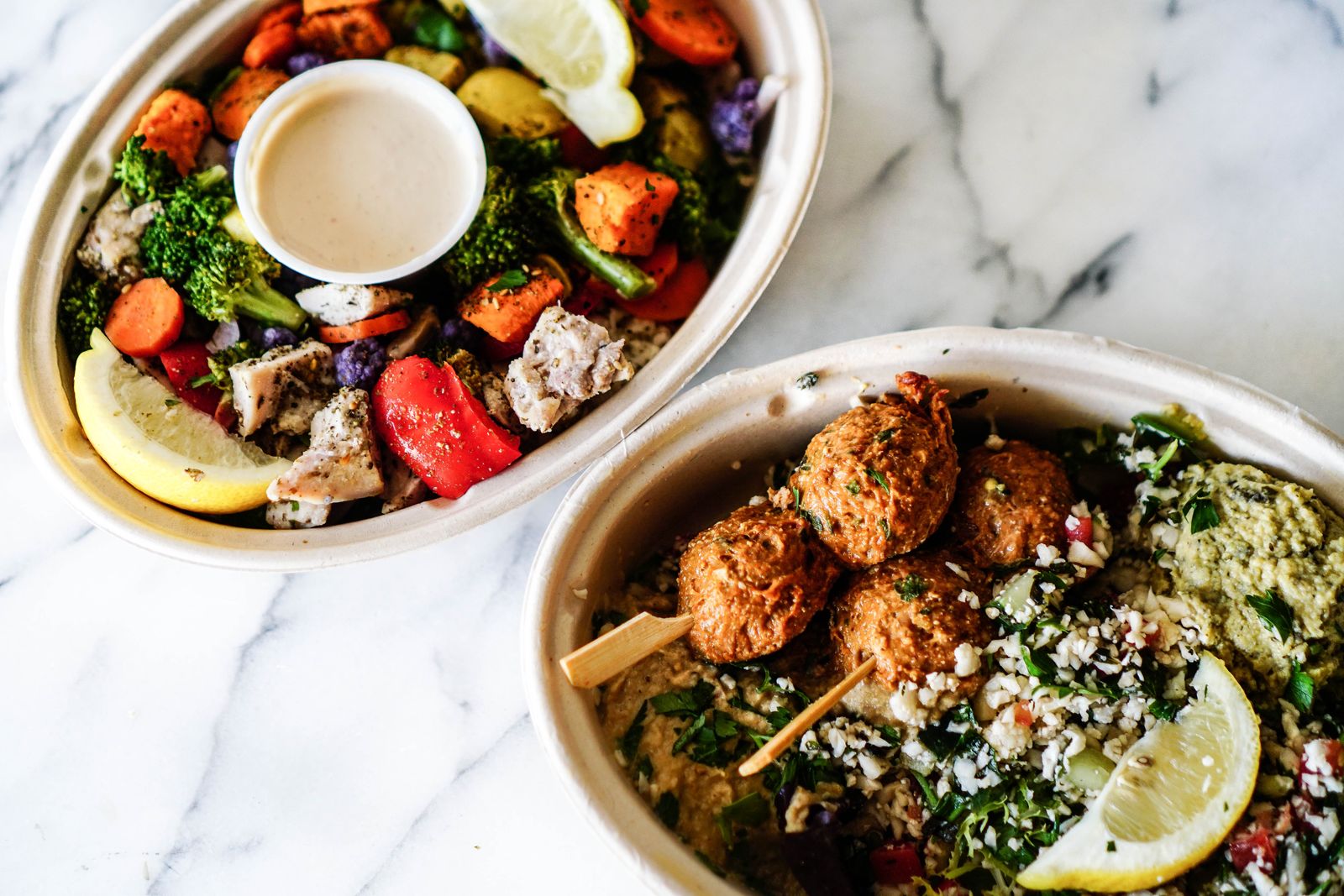
6 Roasted Vegetable Bowl Recipes Worth Making This Week
Each of these roasted vegetable bowls has a distinct flavor identity — not just “vegetables with a sauce.” Pick the one that matches what your week needs and build from there.
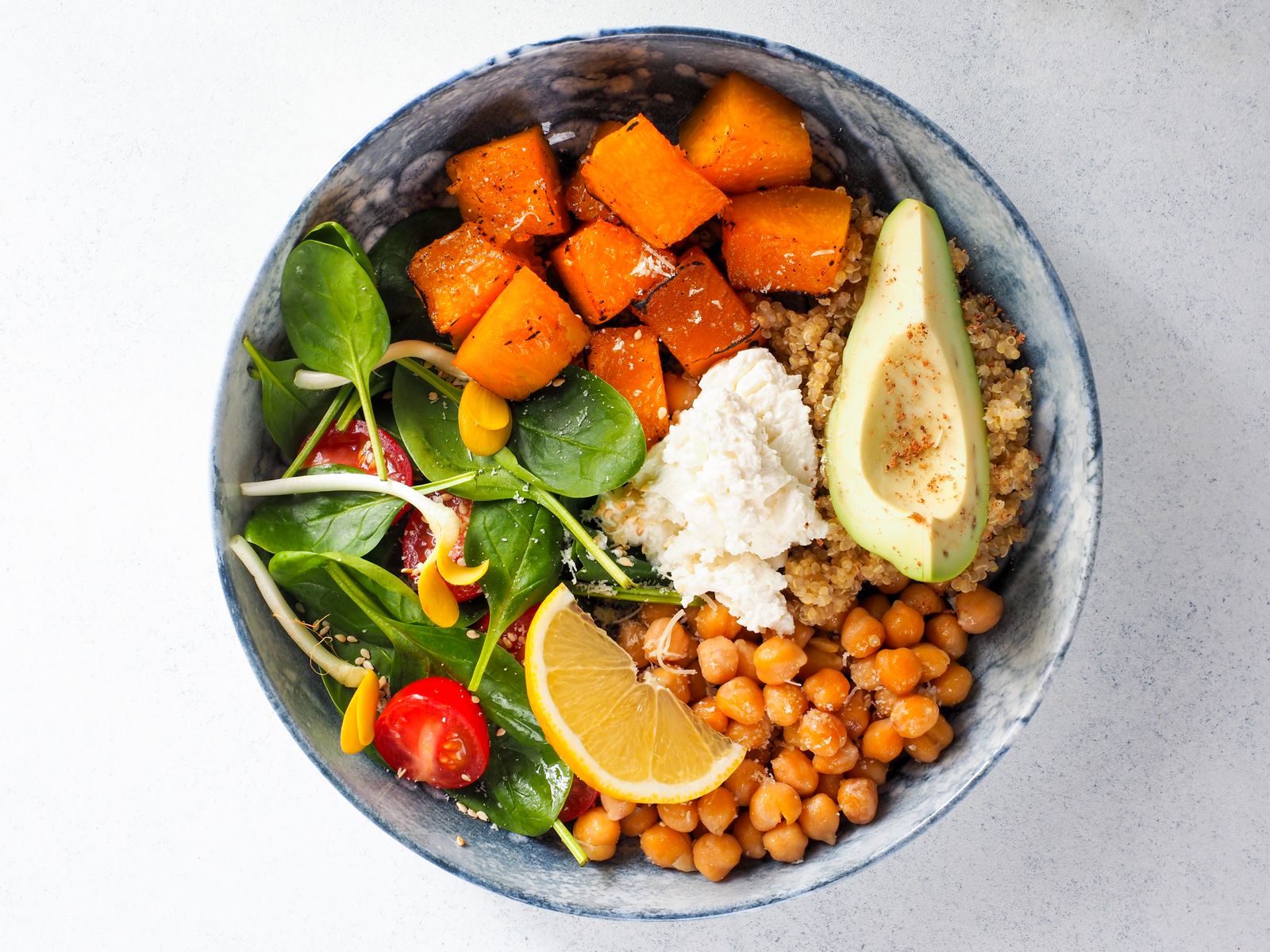
The Golden Glow Bowl
The bowl for when you want something that looks and tastes like it’s actively doing something good for you. Recipe adapted from Dishing Out Health.
- Roast cauliflower florets and carrot chunks (425°F, 25–30 min) with smoked paprika, garlic powder, cumin, salt, and pepper
- Cook 1 cup quinoa in vegetable broth; stir in chopped fresh kale and a drizzle of olive oil at the end
- Golden tahini dressing: whisk ¼ cup tahini + 1 tbsp apple cider vinegar + 1 tbsp maple syrup + ½ tsp curry powder + ¼ tsp turmeric + water until pourable
- Assemble: quinoa-kale base, roasted veg, sliced avocado, pumpkin seeds, dressing
The Kale Pesto Grain Bowl
The one for when dinner needs to feel like something you’d order, not just something you made. Recipe adapted from Love and Lemons.
- Roast cauliflower, halved Brussels sprouts, and broccolini separately (425°F — broccolini 10 min, everything else 20–25 min)
- Cook quinoa; keep warm
- Kale pepita pesto: blend ½ cup pepitas + 2 garlic cloves + 1 cup packed kale + 1 cup cilantro + ¼ cup lemon juice + ½ cup olive oil + ½ cup water until smooth
- Assemble with sauerkraut, toasted pepitas, and fresh cilantro — the fermented element cuts the richness of the pesto perfectly
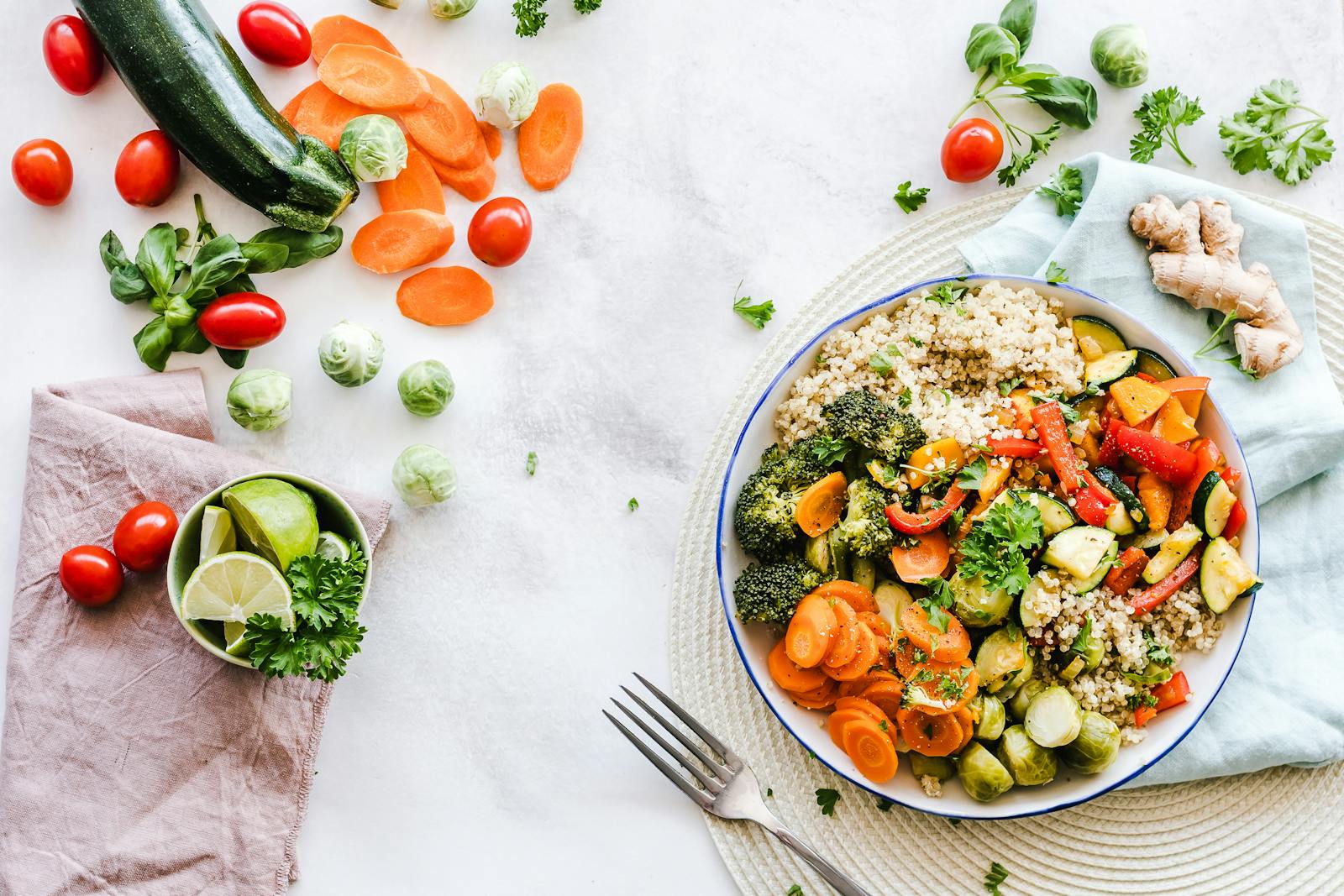
Rainbow Vegetable Bowl
The bowl that looks like a painting and takes thirty minutes. The color comes from choosing one vegetable from each end of the spectrum and letting the high heat do the rest.
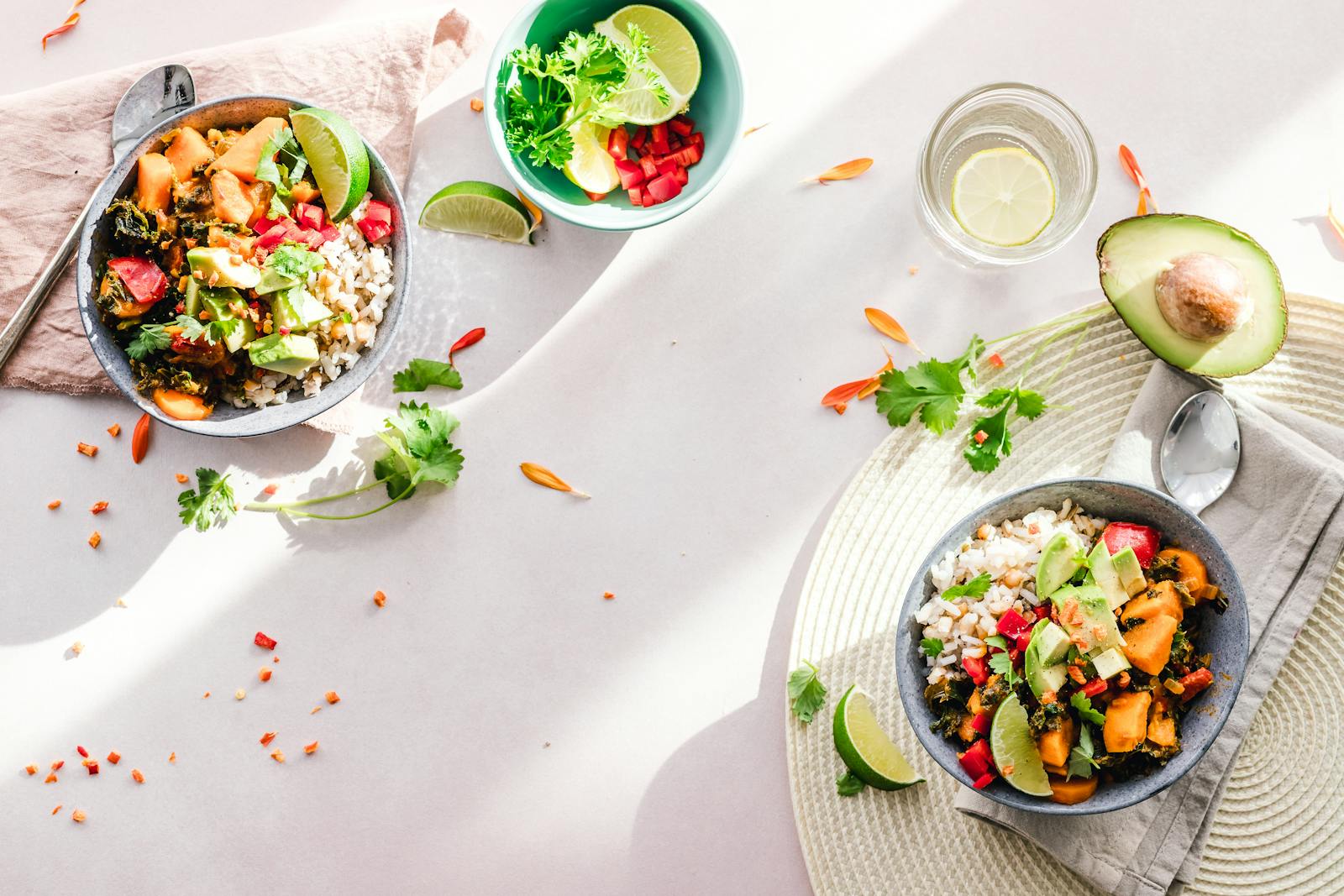
- Roast red bell pepper, purple cabbage wedges, sweet potato cubes, and yellow courgette together (425°F, 25 min) with olive oil, garlic, and a pinch of smoked paprika
- Serve over brown rice or farro
- Lemon herb dressing: 3 tbsp olive oil + 2 tbsp fresh lemon juice + 1 tsp Dijon + chopped fresh parsley and chives + salt and pepper
- Top with hemp seeds and a few pickled red onion slices
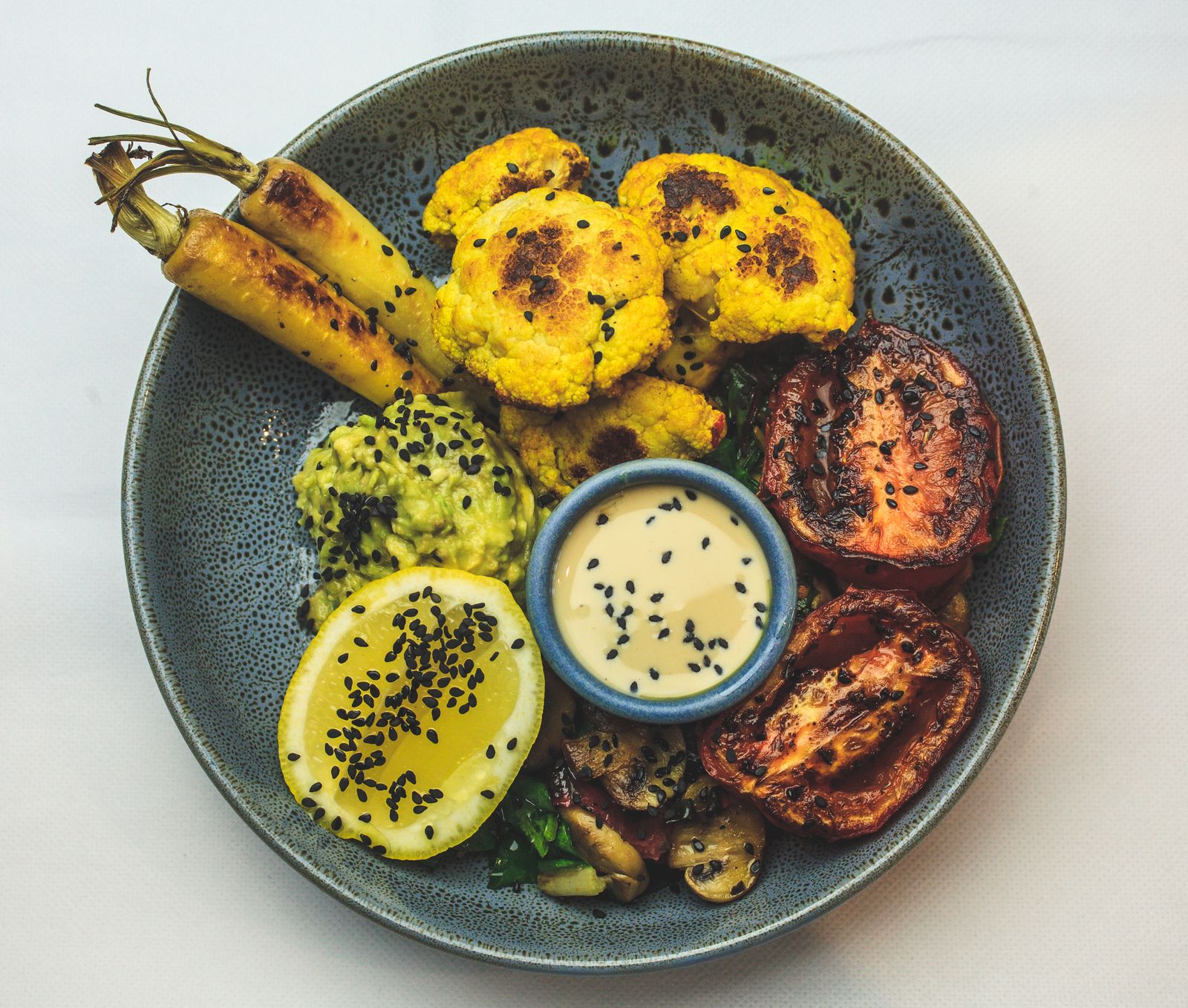
Mediterranean Chickpea Bowl
The bowl for the nights when you want something that tastes like a restaurant did it. Deeply savory, richly textured, and completely plant-based unless you want it not to be.
- Roast eggplant cubes, cherry tomatoes, and drained chickpeas together (425°F, 30 min) with olive oil, cumin, coriander, and a pinch of cinnamon
- Serve over a generous base of hummus spread on the bottom of the bowl, topped with the roasted vegetables
- Herby yogurt drizzle: ½ cup Greek yogurt + 1 tbsp olive oil + squeeze of lemon + chopped fresh mint and dill + salt
- Finish with a handful of kalamata olives and warm flatbread on the side
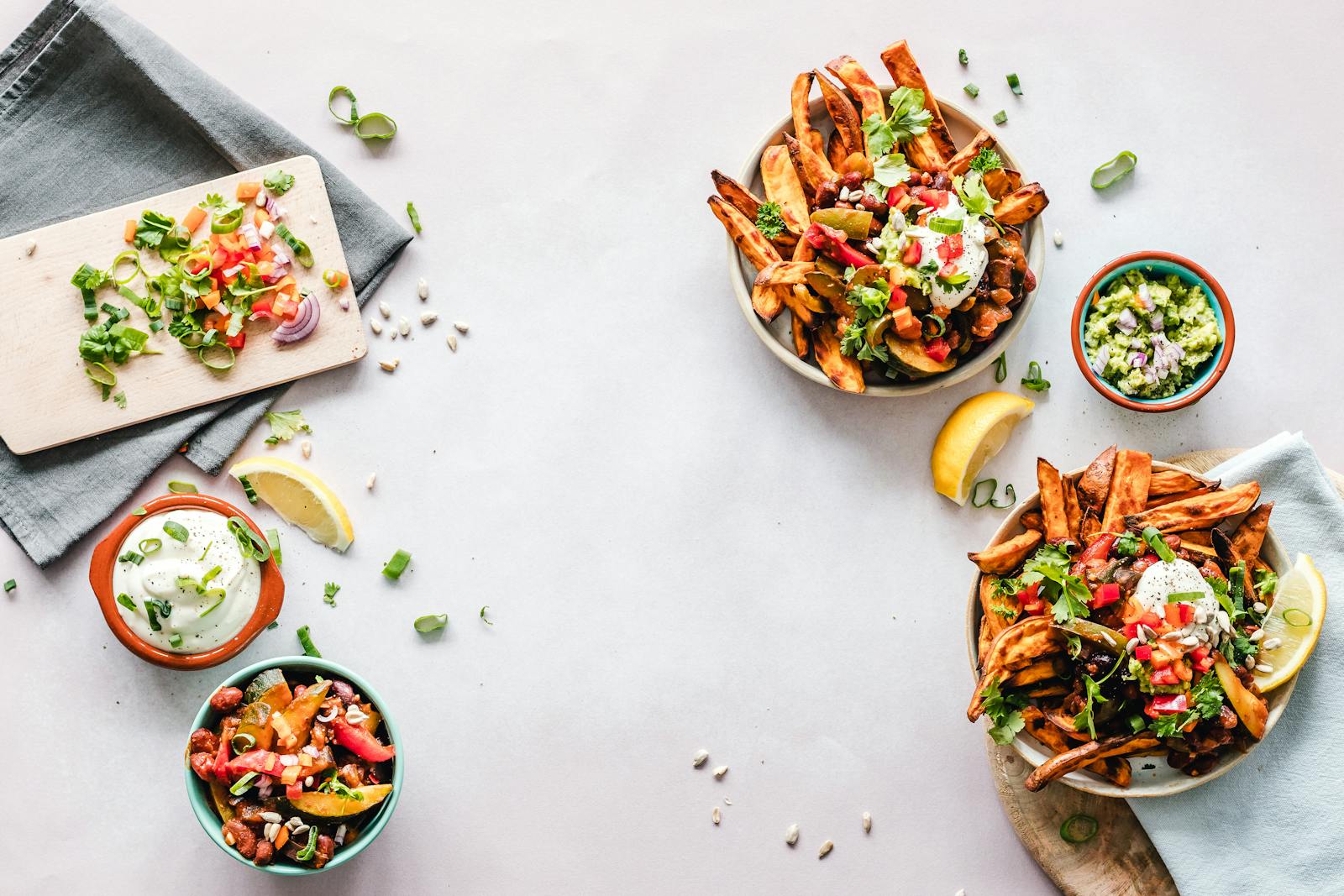
Sweet Potato and Black Bean Bowl
The bowl with the deepest, warmest flavors on this list. It leans Southwest and it’s satisfying in the way that makes you not think about food again for four hours.
- Roast sweet potato cubes and red onion wedges (425°F, 25–30 min) with chili powder, cumin, garlic powder, and a touch of cayenne
- Warm a can of drained black beans separately with a pinch of cumin and smoked paprika
- Serve over rice or with a corn tortilla base
- Chipotle lime dressing: 3 tbsp sour cream or cashew cream + 1 tsp chipotle in adobo (minced) + juice of 1 lime + salt
- Top with sliced avocado, fresh coriander, and a squeeze of lime
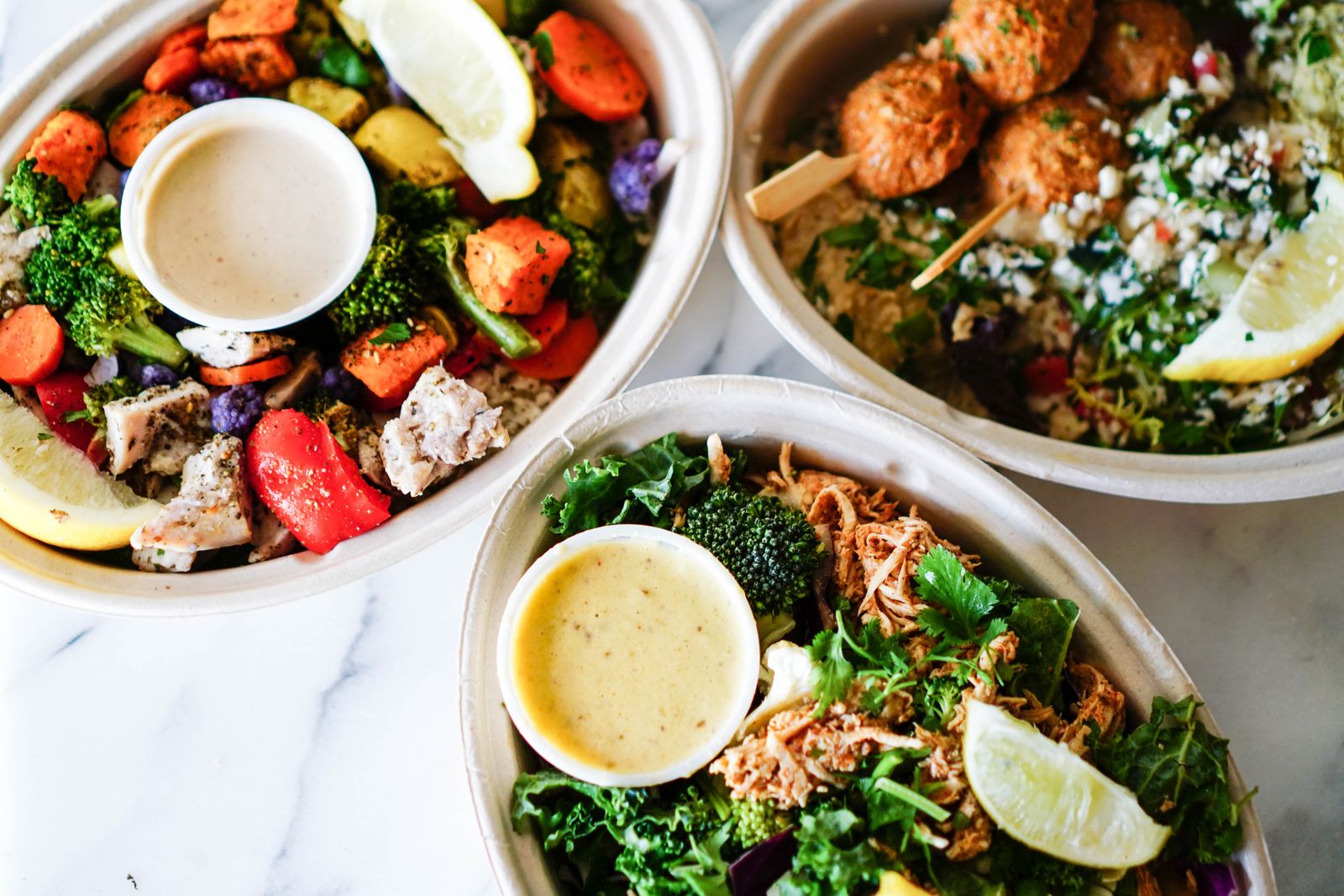
High-Fiber Barley Bowl
The meal-prep hero. Barley holds up better than quinoa after three days in the fridge, which makes this the best bowl for building a full week of lunches in a single Sunday session. Inspired by Beautiful Eats & Things’ high-fiber bowl.
- Roast zucchini chunks, cherry tomatoes, and red onion (425°F, 20–25 min) with olive oil, Italian seasoning, and garlic powder
- Cook pearl barley according to packet; drain and season with olive oil and lemon zest
- Lemon herb vinaigrette: 3 tbsp olive oil + 2 tbsp red wine vinegar + 1 tsp Dijon + 1 tsp honey + fresh oregano or thyme + salt and pepper
- Assemble with crumbled feta, toasted pine nuts, and a handful of fresh rocket
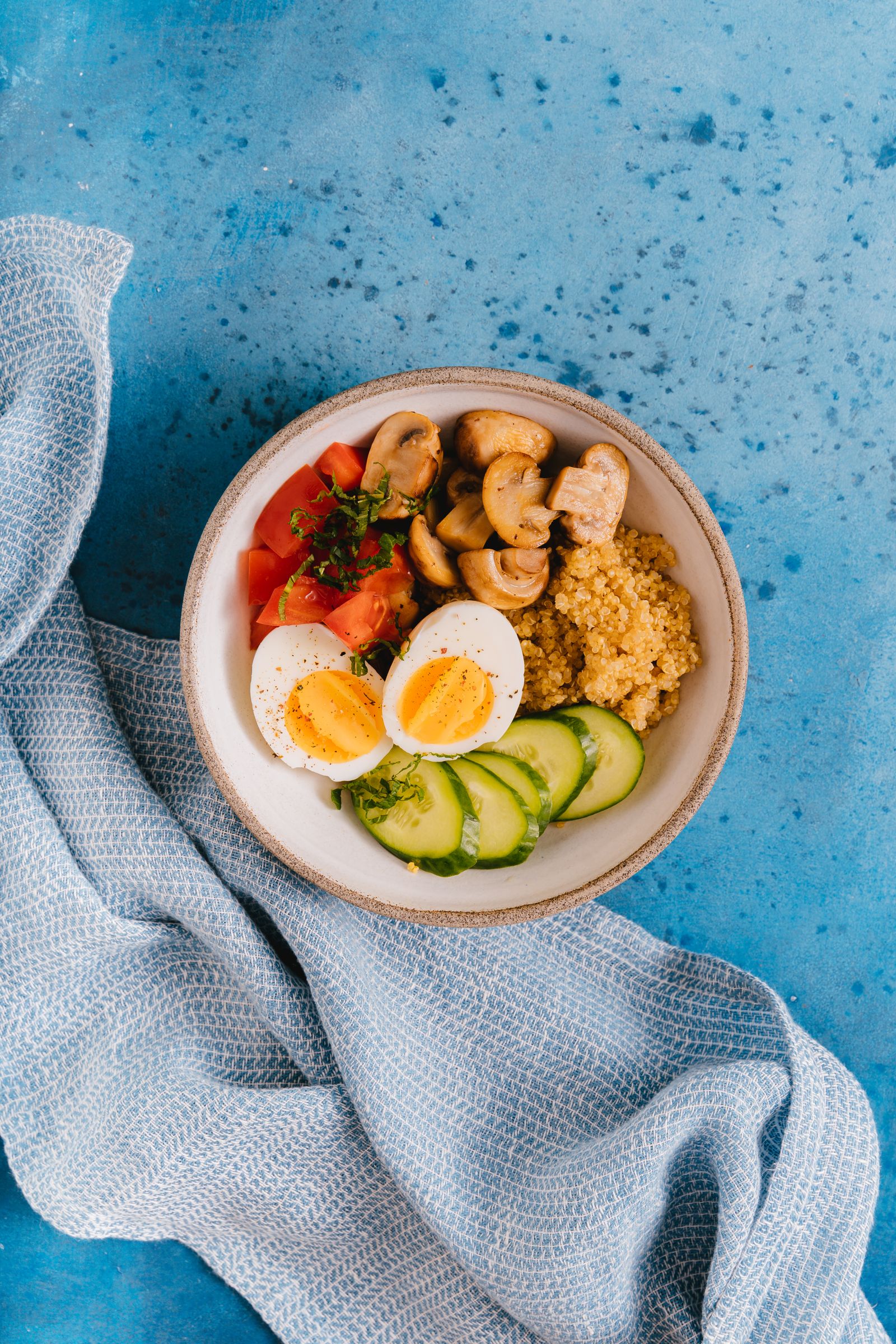
The Perfect Roasting Method — How to Get That Caramelized Edge
The difference between roasted vegetables that are genuinely excellent and ones that are merely cooked comes down to four things. Get these right and every bowl on this list works every time.
- Temperature: 200–220°C / 400–425°F. Lower than this and the vegetables steam rather than roast — soft throughout, no color, no depth. Higher than 220°C risks burning the edges before the centers cook. The sweet spot produces caramelized outsides and tender, not mushy, insides.
- Cut size consistency. If the pieces are different sizes, they cook at different rates and you end up with some burnt and some underdone. Cut everything to roughly the same size — about 2cm / ¾ inch cubes for most vegetables.
- Single layer, no crowding. Crowded vegetables steam each other. Spread them on the largest baking sheet you own with space between pieces. Use two sheets if necessary. This single rule accounts for more failed roasting than any other.
- Enough oil. Each piece needs to be lightly coated, not drowned but not dry. A dry vegetable won’t caramelize — it’ll just dehydrate. Two to three tablespoons of olive oil for a full baking sheet of vegetables is approximately right.
The Sauce Formula That Makes Every Bowl Worth Eating
A bowl without a sauce is just vegetables in a container. The sauce is the difference between something you eat and something you crave. And every good bowl sauce follows the same logic.
Fat + acid + something sweet + something savory + water to thin = a sauce that works on everything.
The tahini base (most versatile)
¼ cup tahini + 2 tbsp lemon juice + 1 tbsp maple syrup or honey + 1 garlic clove (minced or pressed) + pinch of salt + water added gradually until pourable. This sauce works on every bowl on this list and keeps in the fridge for ten days.
The pesto base (for something green and herbaceous)
Any combination of soft green herb + a nut or seed + garlic + lemon + olive oil + water, blended smooth. Kale and pepita. Basil and pine nut. Coriander and cashew. The proportion is roughly 1 cup herb : ¼ cup nut : ½ cup oil : ¼ cup water.
The yogurt base (for creaminess with brightness)
½ cup Greek yogurt + 1 tbsp olive oil + 1 tbsp lemon juice + fresh herb + salt. Thinner, more acidic, and lighter than a tahini sauce. Best with warm, heavily spiced vegetables like the Mediterranean and sweet potato bowls.
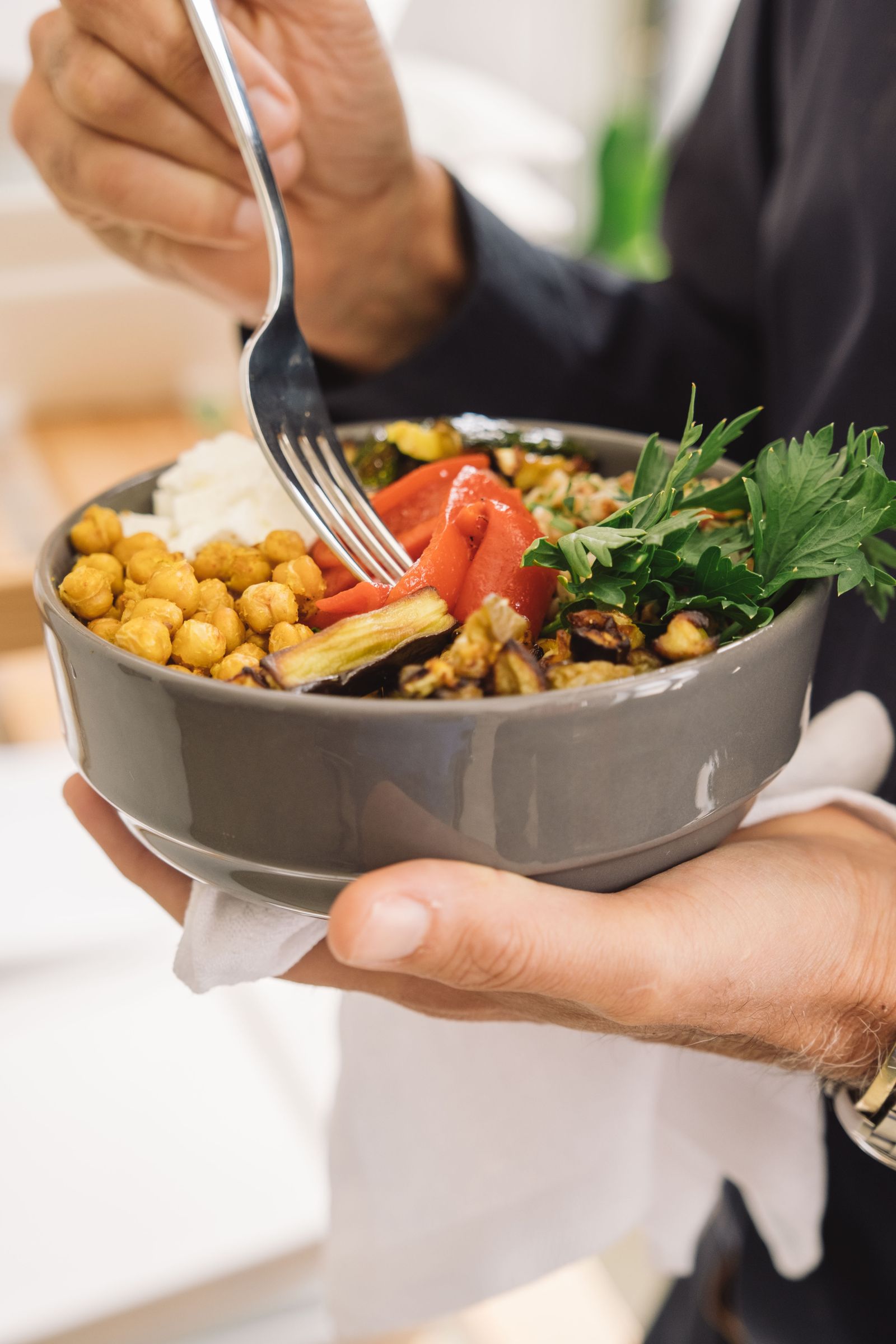
Meal Prep Guide — One Hour, a Full Week of Bowls
These bowls become genuinely life-changing the moment you stop making them one at a time and start building components that work together across the week.
- Sunday session (45–60 minutes): Roast two large trays of mixed vegetables. Cook one large batch of grain (quinoa or barley). Make one sauce — tahini is the most versatile. Store everything separately in the fridge.
- Keep sauces separate until serving. Sauce on a stored bowl makes the grain soggy and the vegetables lose their texture. Drizzle fresh each time. It takes ten seconds and makes a four-day-old meal taste newly assembled.
- Build different bowls from the same components. Roasted cauliflower and sweet potato work in the Golden Glow bowl on Monday, the Mediterranean bowl on Wednesday (add hummus and olives), and alongside scrambled eggs on Thursday morning. You haven’t repeated a meal; you’ve varied the context.
- The grain swap. Quinoa lasts 4 days refrigerated. Pearl barley lasts 5. Brown rice lasts 4. Farro lasts 5. If you’re prepping for a full five-day week, barley or farro will hold better than quinoa by day four.
- Fresh toppings daily. Avocado slices cut daily — not pre-sliced. Fresh herbs added at serving. A few leaves of rocket, watercress, or fresh spinach. These take thirty seconds and are what make a prepped bowl feel like a fresh meal rather than a scheduled obligation.
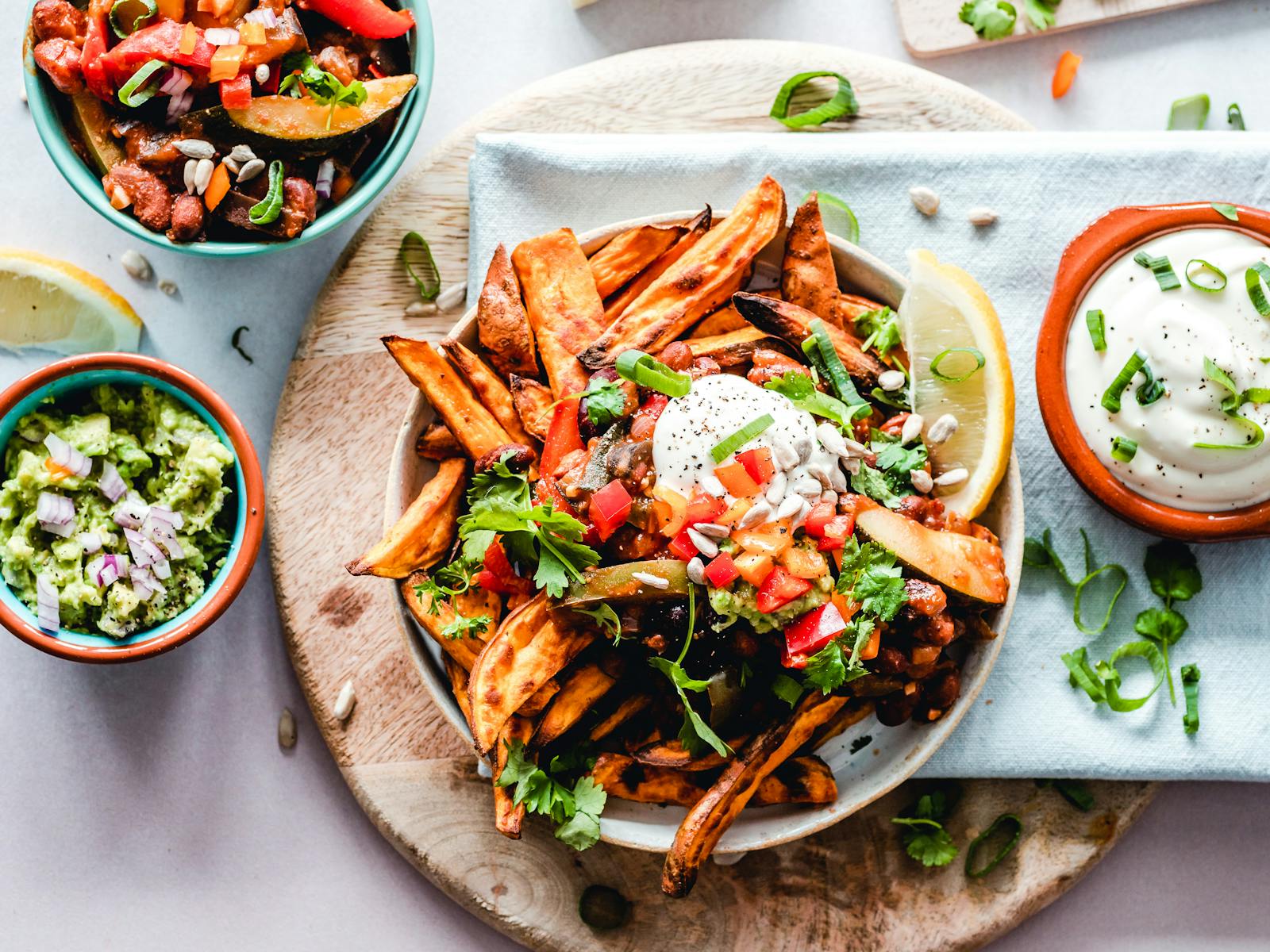
For more recipe ideas that work as well on a weeknight as a weekend, the Food section on Can We Talks has everything from quick dinners to recipes worth planning around.
The Last Word on Eating Well Without a Lot of Drama
Roasted vegetable bowls are not the most glamorous category in food. They won’t win at a dinner party the way a slow-braised something would. They’re not the thing you order when you want to feel like you’re treating yourself.
But they are the meal that shows up consistently. The one that makes Tuesday night feel manageable. The one you’ve been eating for three weeks straight without noticing because it keeps being exactly what you needed.
That’s the quiet victory of a good bowl. Not impressive. Just reliably, genuinely good.
Pick one from this list and make it this week. Add it to the rotation. See how long before it becomes the meal you make without thinking — which is, honestly, the highest possible compliment any recipe can earn.
Real Talk. Delivered. XOXO